
Raising the Bar
WVU law students celebrate 100 years of Baker Cup glory
Originally published in WVU Stories.
Imagine standing up before the West Virginia Supreme Court of Appeals and arguing passionately for your client in a case that could help decide your career.
And you’re not even a lawyer. Yet.
Every year since 1926, the West Virginia University College of Law has gone all-in for the Baker Cup.
The school’s signature moot court competition pits two WVU Law students — selected through multiple rigorous rounds of research, brief writing and oral arguments — against each other in an appellate battle of the minds.
“Moot court” cases are fictitious, but the students flex real mental muscle as they argue for past court decisions to be either reversed or upheld.
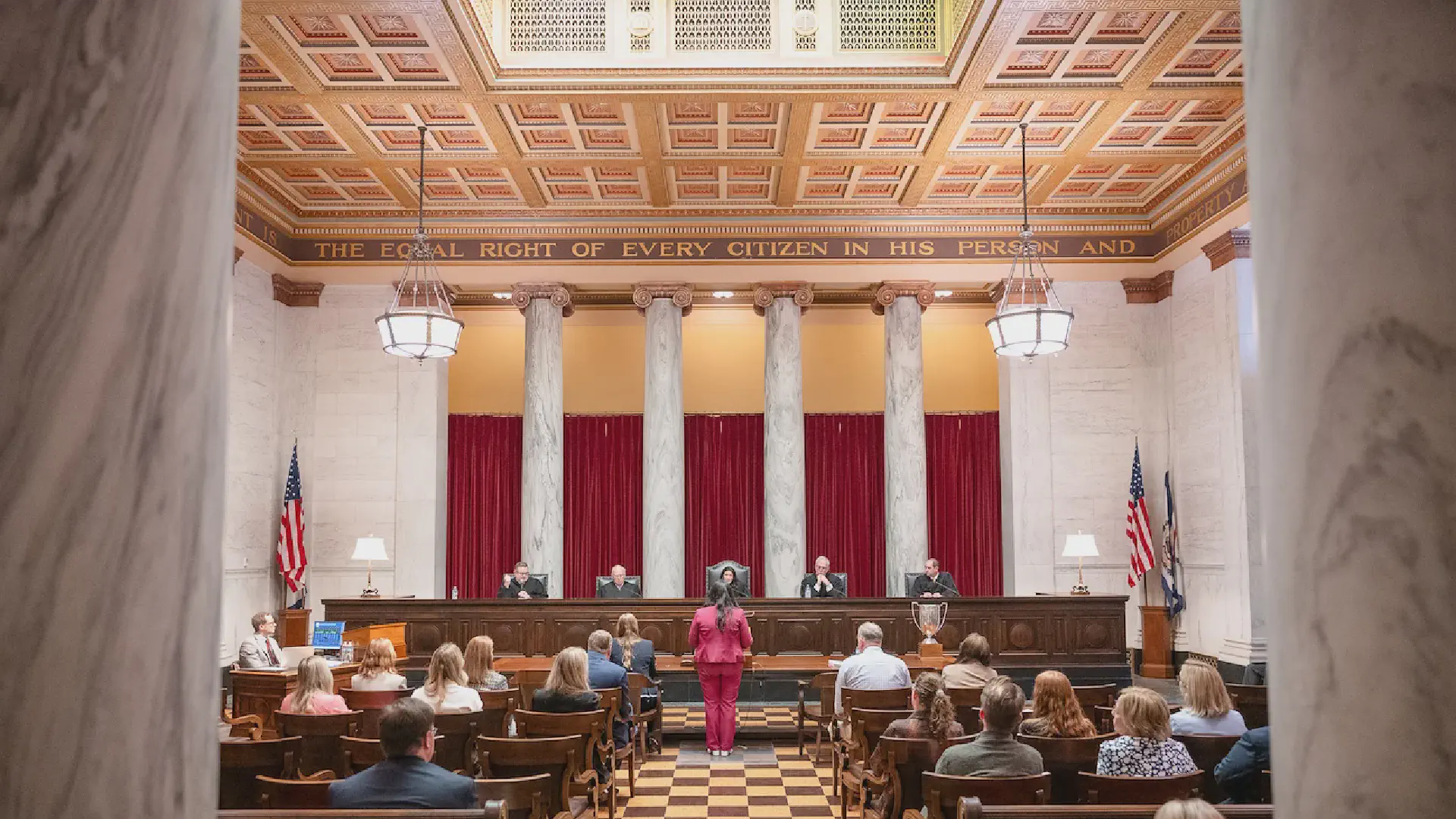
If that weren’t stressful enough, the final round is judged by the highest court in the state, the West Virginia Supreme Court of Appeals, as if it were a real case.
Countless memories.
A celebrated legacy.
As WVU Law readies for the next century of legal competition, here are a few standout moments that have defined the Baker Cup over the last 100 years.
APPROACHING THE BENCH
Survey the Baker Cup’s 100-year history and some themes emerge. There’s the success of past participants, the transformative nature of the competition and the sense of history behind every win.
There’s also the scare factor.
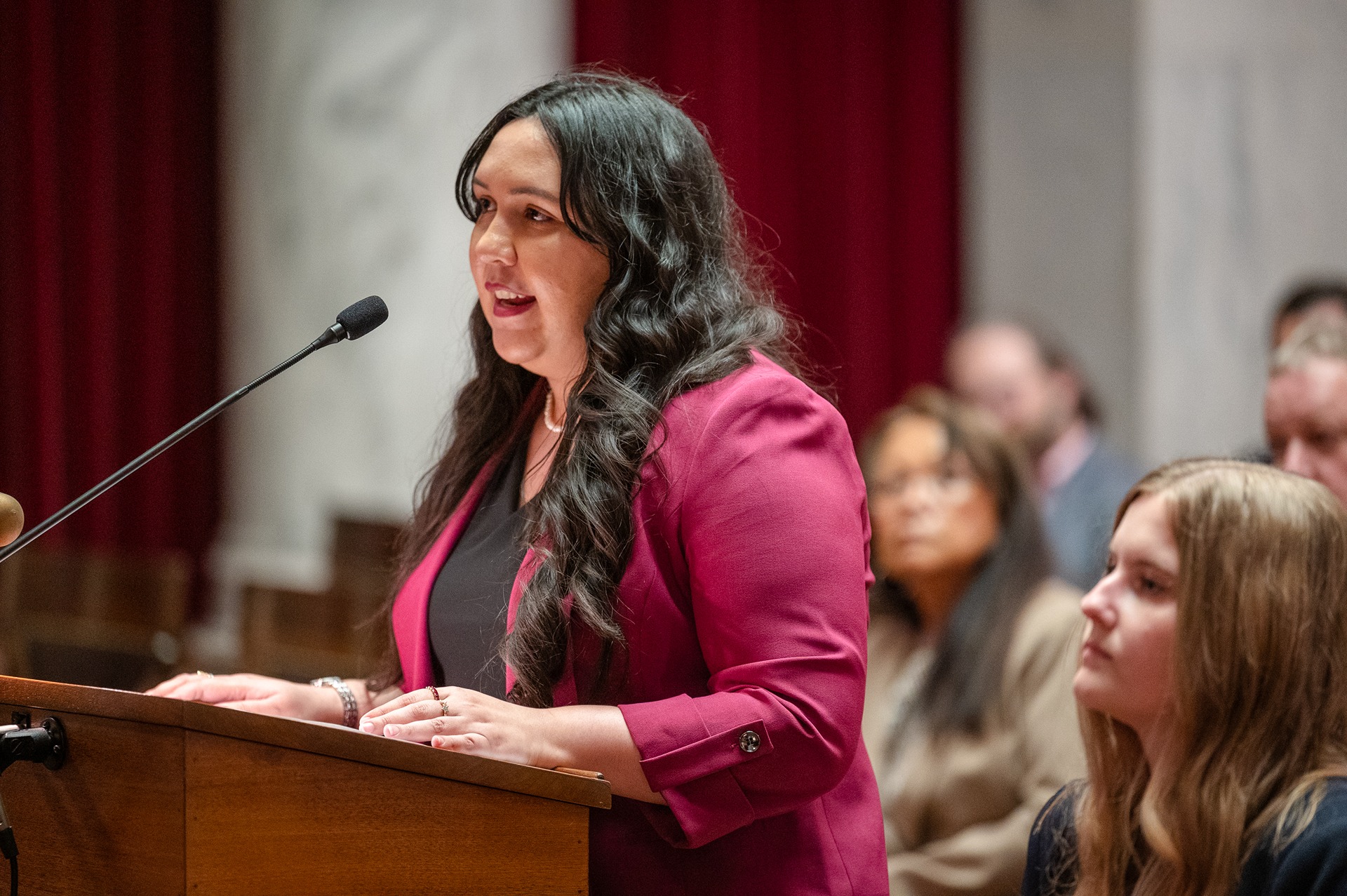
Both of the Cup’s 2026 finalists describe arguing in front of the West Virginia Supreme Court the same way: “Intimidating.”
“You don’t grasp the significance of it until you get to the final round in front of the Supreme Court,” Huntington native Kelli Campbell said.
“Then it feels very real, very important and very scary. But it speaks to the community of the West Virginia State Bar that the Supreme Court invests this time in the future attorneys of the state. I’m honored to have been given this experience. I think it’s helped me grow a lot as an attorney.”
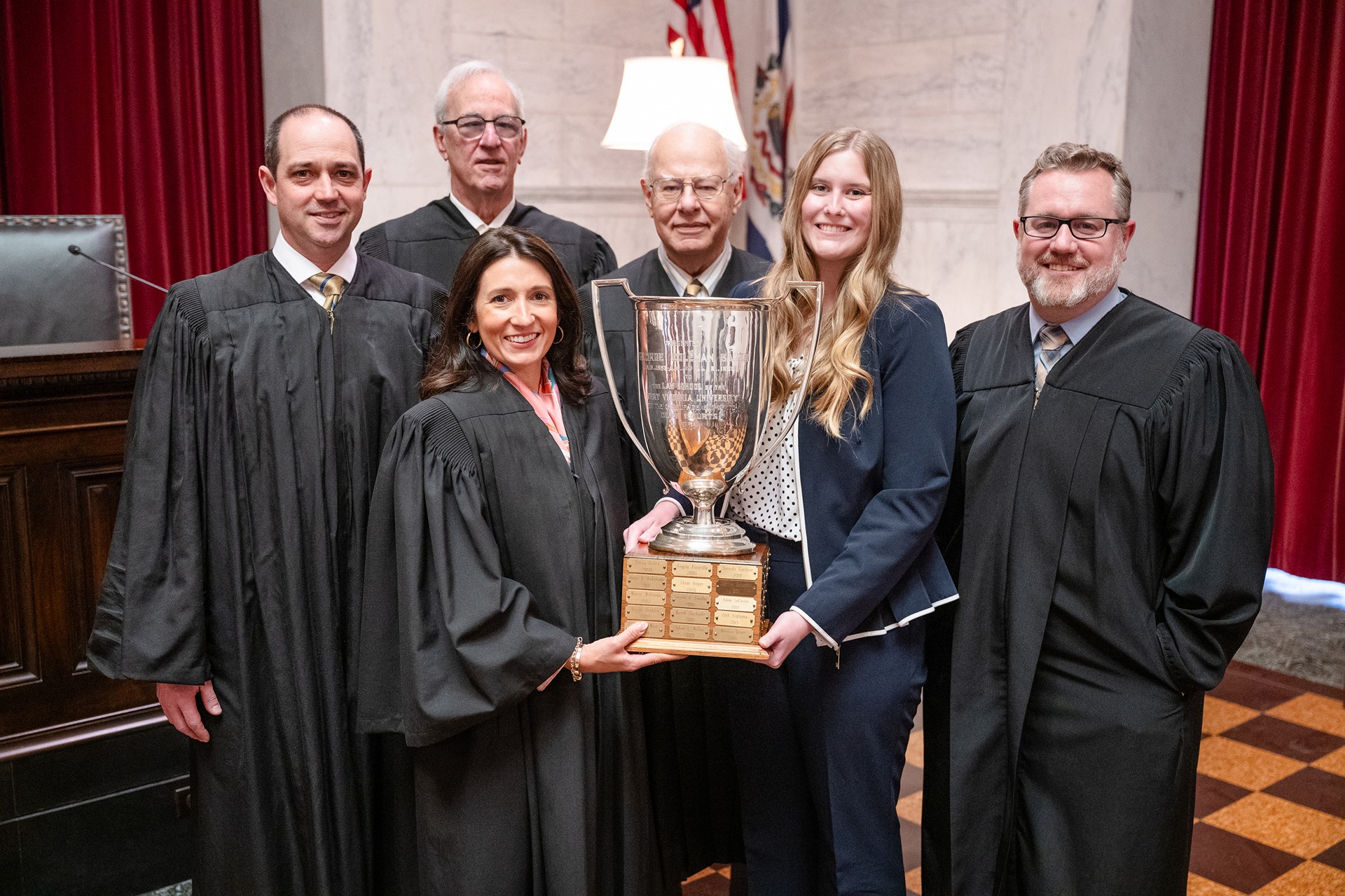
Campbell now stands as the winner of the Baker Cup’s centennial competition, with Morgantown’s Kaitlyn Nedrow as the runner-up.
The two argued a mock immigration case before the Court.
“It was amazing,” Nedrow said. “I was the runner-up, but just being there is the win. I stumbled over my words and got a little shaky, but I still accomplished everything I wanted to do that day, which was to be the best advocate I could be.”
The two finalists entered the competition with different goals. Neither thought they’d make the final round.
Nedrow, a member of the College of Law’s Moot Court Board, had a burgeoning interest in appellate law and wanted to test herself. She came away from the competition with pride in her performance.
“This is what law school in West Virginia is about,” she said. “I’m so proud that I got to represent my school and showcase that.”
Campbell, on the other hand, felt her appellate advocacy skills could be sharper and took advantage of the Baker Cup to improve them. She was comparing herself against a former WVU Law student close to her heart — her father.
“My dad was probably better at law school,” she said. “He was fourth in his class, but there are two things I have on him: I got a better grade in tax law, and I won the Baker Cup.”

FAMILY TRADITIONS
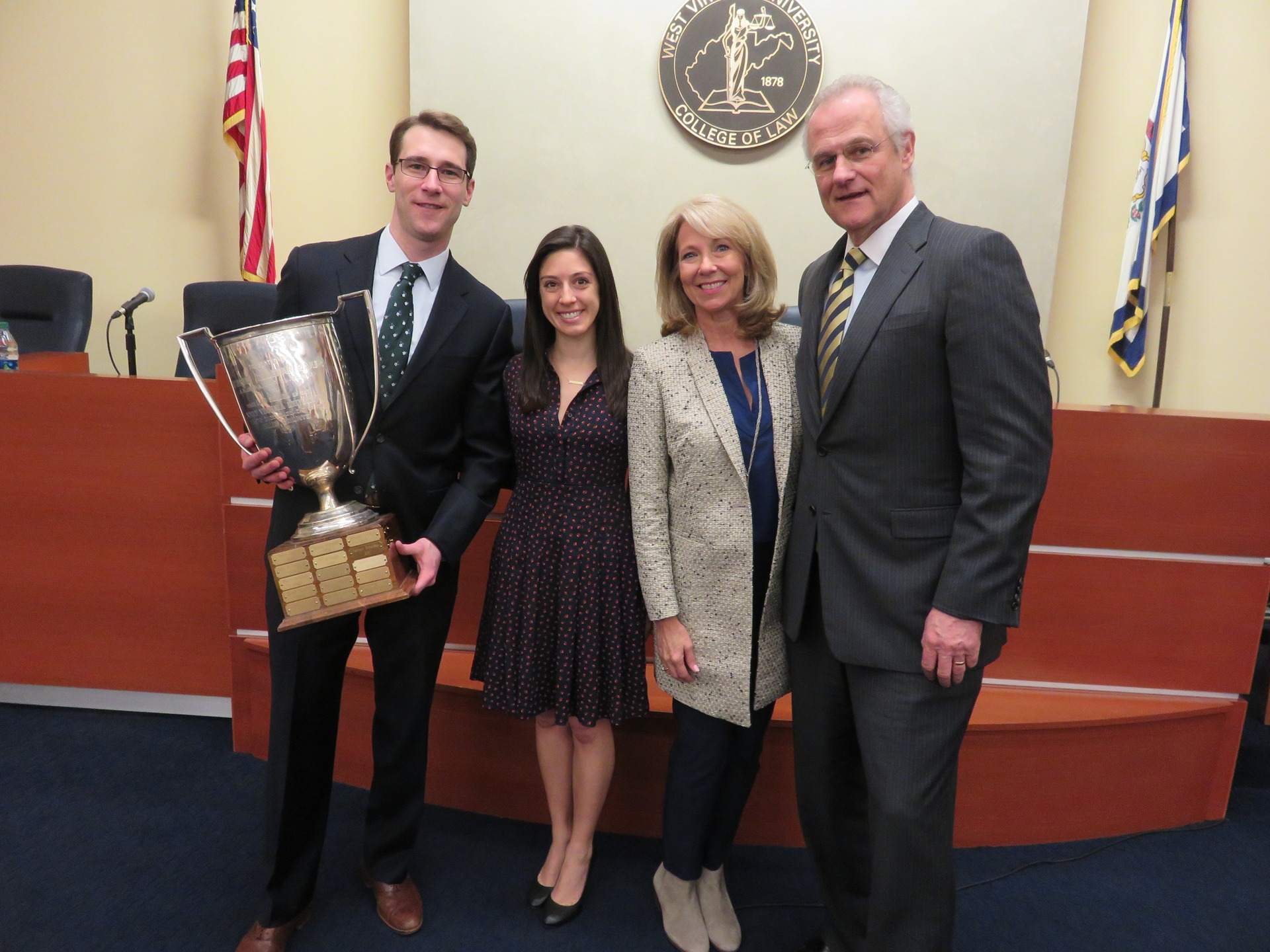
Ask Steve and Chase Farmer how they ended up at WVU Law, and they’ll both say the same thing: “My father.”
For Steve, that answer would refer to George R. Farmer Jr. (after whom the George R. Farmer Jr. Law Library at the College of Law is named).
“My father was a lawyer, and his father too,” Steve said. “They practiced together in Morgantown. And my mother’s father was a lawyer in Williamson, West Virginia. If you look across various families, oftentimes older generations lead toward what their descendants do.”
For Chase, that answer would refer to Steve.
“When I decided to pursue law school, there was only one option for me,” Chase said. “I wanted to carry on the family tradition, being a born-and-bred West Virginian. WVU was the only law school I applied to.”
If WVU Law was a family affair, so was the Baker Cup. To date, the Farmers may be the only family with two generations of winners — Steve in 1982, Chase in 2017.
It was, as both attest, nerve-wracking. Arguing in front of the West Virginia Supreme Court of Appeals is a privilege afforded to relatively few lawyers, and even fewer law students.
Chase remembers feeling confident, thanks to his extensive preparation. “I argued against a friend of mine, Ron Walters Jr., and he was excellent. It was a very close call.”
Steve remembers it differently.
“I ended up in the finals against a great lawyer and great friend named Mo Rubenstein,” Steve said. “I remember the courtroom was pretty full, and it got press coverage — and I probably gave one of the worst arguments I had ever given that night.”
Whatever the case may be, both Farmers won their cases in front of the women they would later marry.
Chase also had a special witness in the courtroom: his father, who remembers the moment well.
“We were very, very proud of Chase,” Steve said. “I know how hard it is. It’s like athletes preparing for their chosen sport — you don’t just show up and do that, with all the work and thought and energy and effort that goes into it. I was extraordinarily happy for him.”
Here Chase’s memory again diverges, but only a little. He recalls his father’s reaction being a little more lawyerly.
“We talked about the merits on both sides, as lawyers do,” Chase said. “He acknowledged that my competitor was very strong and that it was a very close argument. But he was proud.”
A FIGHTING CHANCE
In 1977, Cathy Davis won a landmark civil case against the New York State Athletic Commission on the grounds that she’d been denied a boxing license because she was a woman.
That same year, in West Virginia, two women were fighting a battle of their own.
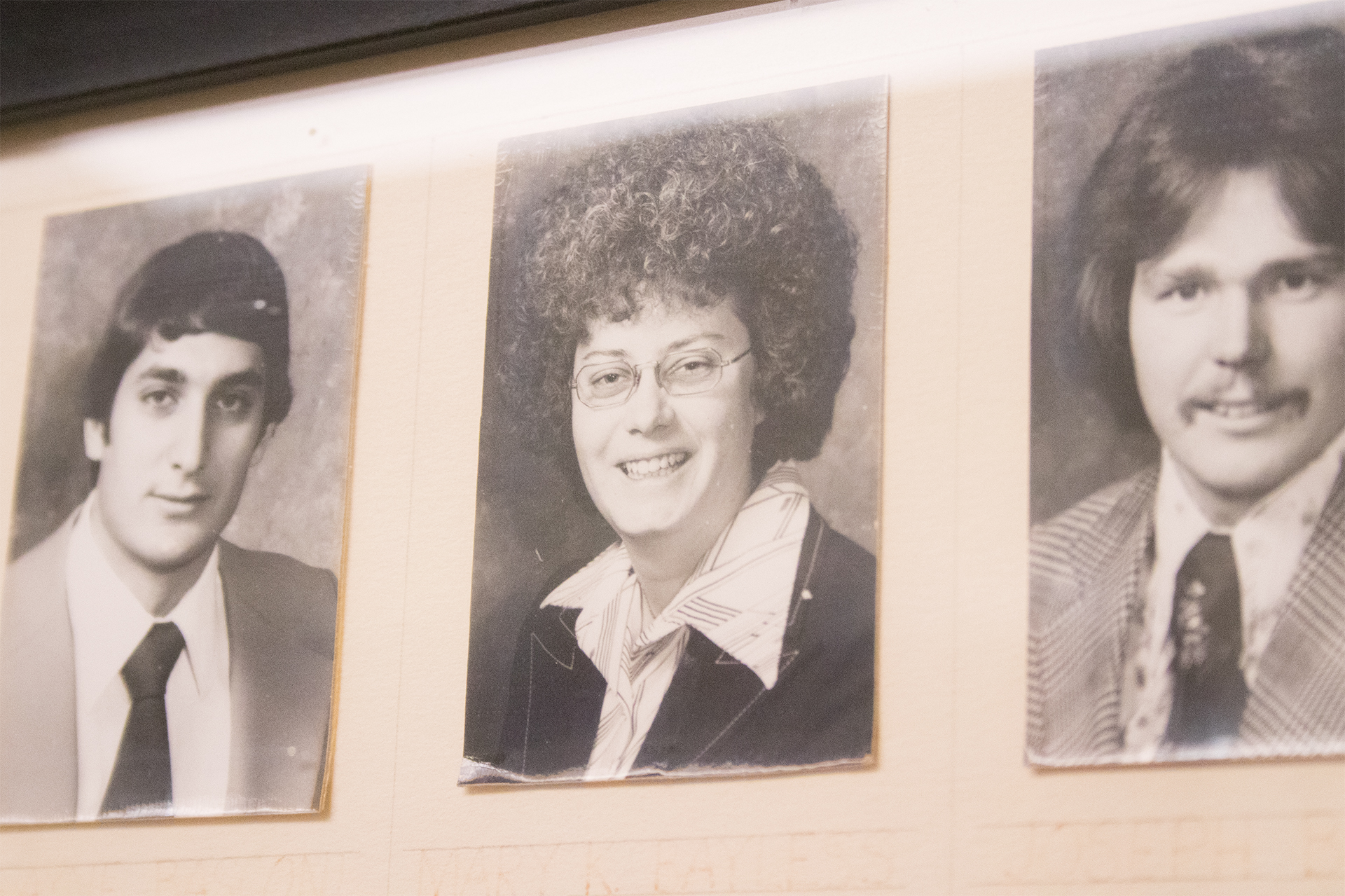
On one side was WVU Law student Kathryn “Kay” Bayless of Bluefield.
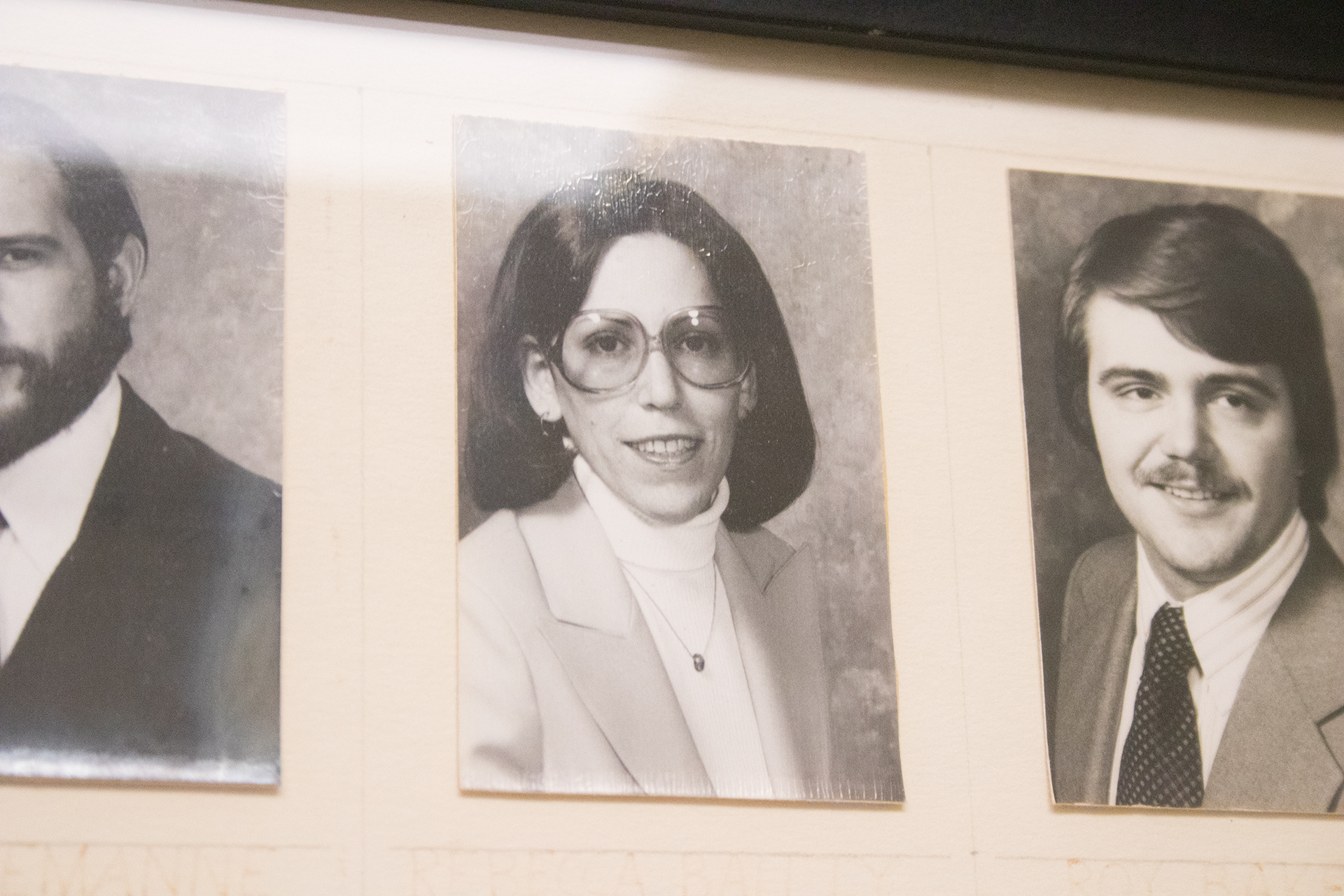
On the other was her classmate, Rebecca Baitty of Clarksburg.
Briefs in hand, standing before their home state’s Supreme Court, they went head-to-head in the Baker Cup’s historic first all-female final round.
The courtroom was packed. It was a momentous day.
“You have to put yourself back in the context of that time,” Bayless said. “The College of Law had admitted women for a long time, but only between two and five per year. My class, the class of ’79, had the largest number of women who’d ever been admitted.”
When it came to the Baker Cup, Bayless and Baitty weren’t the first women to compete, nor were they the first women to advance to the finals. Just the year before, Barbara H. Fleisher had become the first female winner in Baker Cup history.
However, nobody was ready for an all-female finale — nobody but the contestants themselves. Bayless had worked hard to get there. A mother and former teacher, she was ready to make an impression in her new field.
In her words, when she and Baitty were named the finalists, “A shockwave reverberated through the population at large. The courtroom that we had at the College of Law was jam-packed. Most of the student population was watching that final round. It was a big deal!”
In the end, the win went to Baitty, but for both finalists, the experience was worth more than the Baker Cup itself.
Bayless went on to argue, by her estimation, more than 40 cases before the West Virginia Supreme Court.
So did Baitty, who passed away in 2017.
Bayless remembers her as a talented, capable, outstanding opponent whose fierce competition sharpened her own legal instincts.
For Bayless, being a runner-up was as good as gold. Winning the Baker Cup mattered less than having a chance to fight for it.
“I remember thinking, when it was over, ‘If I can manage to do this, there’s nothing that’s getting in my way,’” Bayless said.
“From then on, I looked forward to the opportunity to appear before that court and argue cases. Quite frankly, I won most of them.”
LOCAL ROYALTY
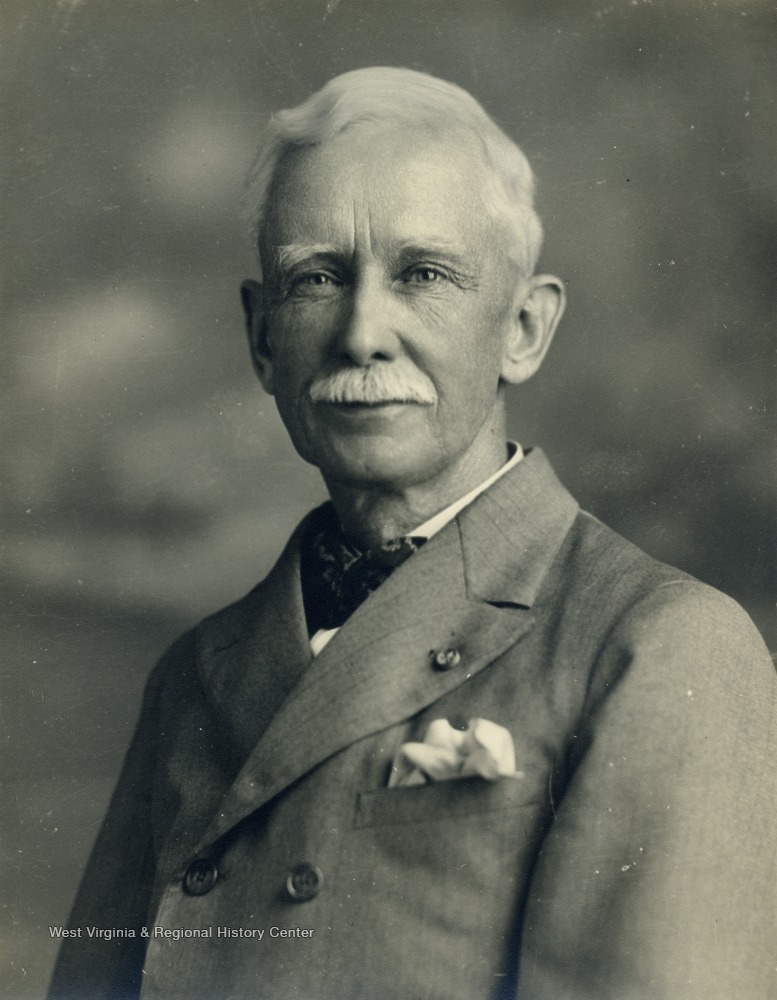
And then there’s the man whose name is on the cup.
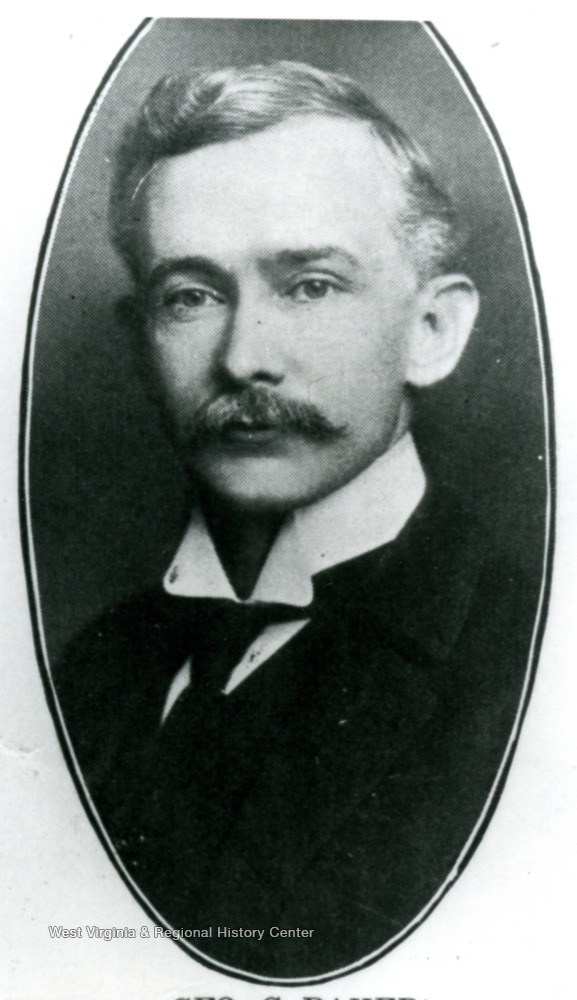
Born in Monongalia County in 1862, George C. Baker received his WVU law degree in 1886 and quickly distinguished himself among the state’s legal community, becoming a partner in a local law firm, serving as a prosecuting attorney and joining forces with fellow WVU Law alumnus Frank Cox to open Cox & Baker LLC.
Known for boosting state income by reforming tax laws for coal, oil and gas leases, Baker was named West Virginia’s judge advocate general by Governor William Glasscock in 1909.
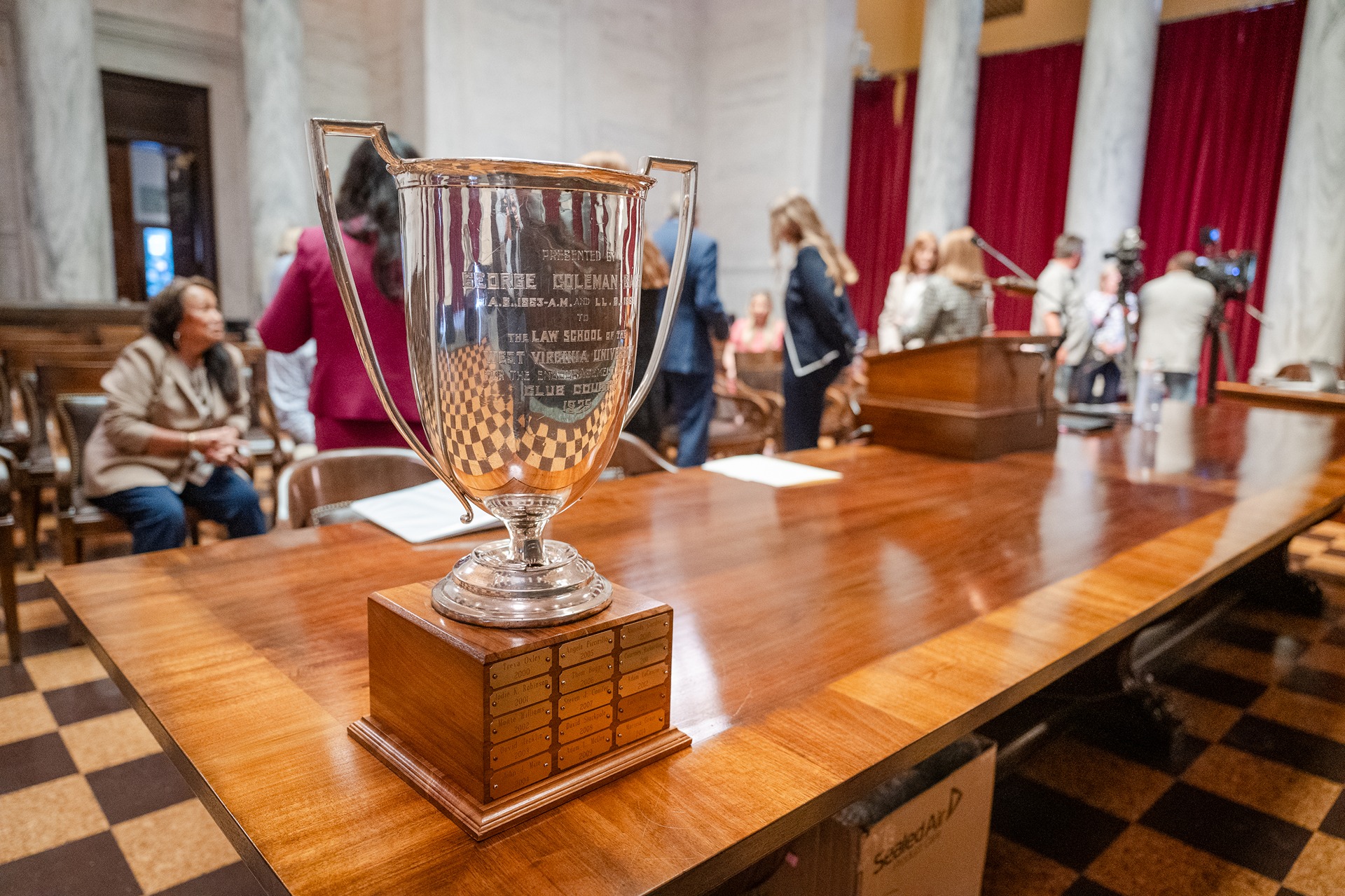
And in 1926, he posted this notice in the West Virginia Law Review, then known as the West Virginia Law Quarterly:
“An opportunity to gain valuable experience in briefing and arguing questions of law is afforded the law students by the establishment … Perhaps in no other way can a lawyer-like attitude of mind toward legal study be so early acquired by law students … For the encouragement of this work, Mr. George C. Baker … of the Morgantown bar, has presented a handsome cup, custody of which is to be awarded annually to the Club Court making the best record for the year.”
That “handsome cup” has now inspired hundreds of lawyers to dedicate their lives to serving the law in the Mountain State.
The Cup is not Baker’s only legacy. He served as dean of the Morgantown Bar prior to his death in 1942, and his great-great-great grandson, George Baker Armistead, still resides in Morgantown today.
Armistead, himself a WVU Law alumnus and lawyer, said, “Growing up in this town, I couldn’t get by without somebody asking me if I was going to be a lawyer like my father and grandfather. I was well aware of the legacy then, and didn’t give much thought to what else I was going to do. It’s a great tradition, and I hope lawyers continue to appreciate the responsibilities they have to society.”
Photos by J. Alex Wilson and submitted by the WVU College of Law.
MEDIA CONTACT:
Andrew Marvin
Assistant Director of Communications and Marketing, WVU College of Law
Related
- Case History: WVU Law student Grant Joynes investigates the ghosts of Raleigh County
- WVU Law May 2026 Commencement: Future Leaders Take Their Next Steps
- Graduation 2026: Kayla Brown and Parker Stout, in love and law
- Graduation 2026: Chris Payne follows the trail his forefathers blazed
- Graduation 2026: Abigail Paugh brings a lawyer’s-eye-view to social work