
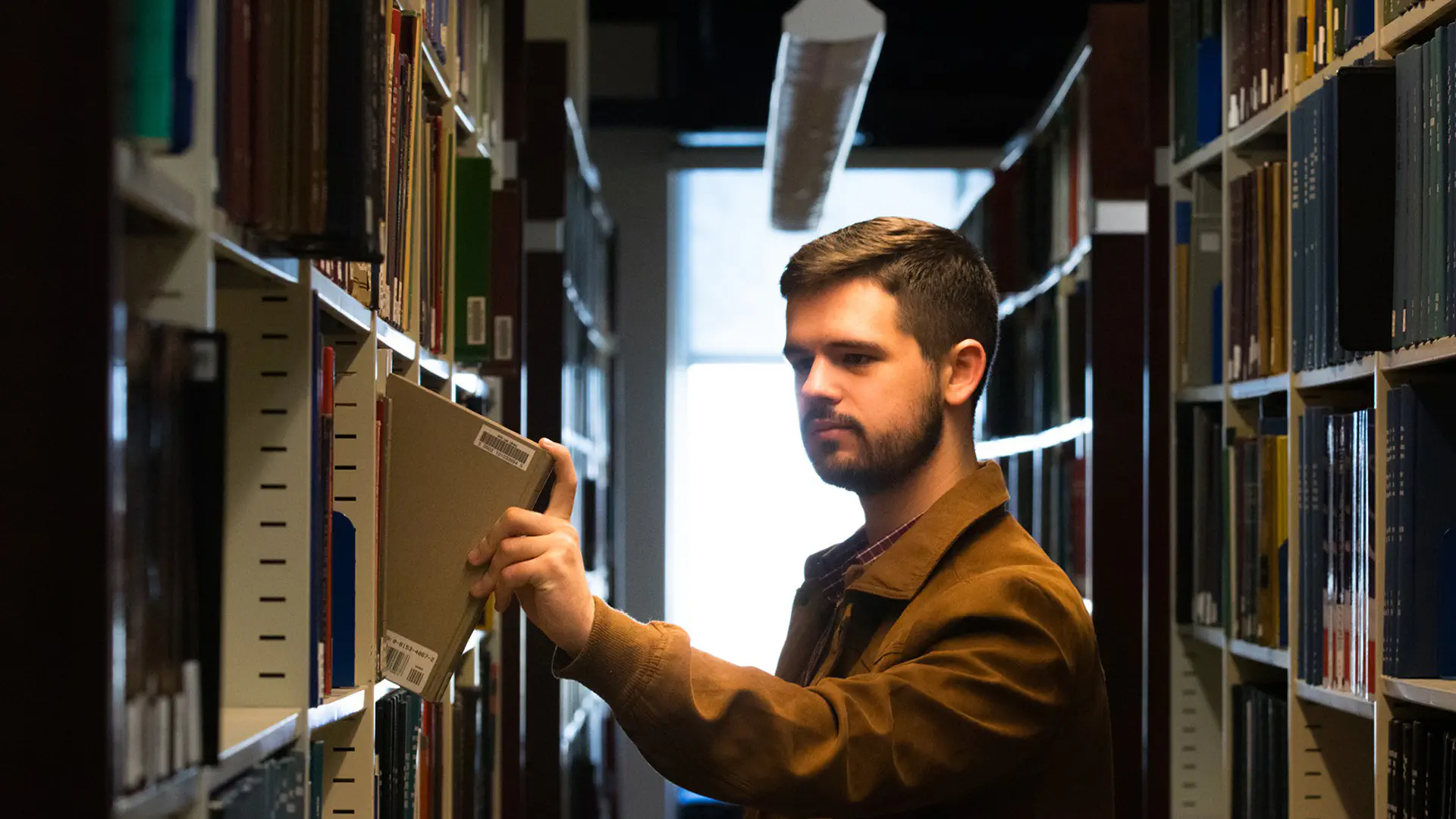
Case History: WVU Law student Grant Joynes investigates the ghosts of Raleigh County
A missing body. A 63-year-old cold case. A tight-knit community in southern West Virginia. For Grant Joynes, it’s part of the job.
Talk to Grant Joynes about why he wants to practice law, and you’ll repeatedly hear variations on a three-word phrase:
“I think my main goal was always to make a difference.”
“If you want to make a difference in the lives of people, all the lessons of history will tell you that the law is the way to do that.”
“This is the place to be if you want to make a difference.”
That’s his story, and he’s sticking to it.
“I’m from West Virginia and I really care about the region and helping people as best I can,” Joynes said. “West Virginia University seemed like the natural choice.”
Hailing from Beckley, Joynes is a 2L student at the WVU College of Law. Soft-spoken and contemplative, he brings a strong belief in community leadership to his studies, serving as an officer for the Education Law Club.
Pursuing an interest in criminal law, Joynes landed a summer internship with the Raleigh County Prosecutor’s Office with a phone call. It was in that internship that he learned about Sergeant James Lee Haynes.
Deployed in West Germany, Sergeant Haynes returned to the United States in December 1963. After visiting his wife and children in Baltimore, he decided to hitchhike to his family home in the small town of Maben, West Virginia. Once he came to a roadside bar in Raleigh County, the story, as Joynes puts it, “Becomes a little wishy-washy.”
There was, supposedly, an altercation between Haynes and a group of men. He left the bar and was never seen again.
“The suspicion from that time was always that someone had run him down with a vehicle, then taken his body and disposed of it somewhere. The missing body was what we were looking for.”
After more than 60 years, the U.S. Army Criminal Investigation Division had decided to reopen the case. A multi-agency task force was assembled from local and federal agencies, and Joynes was pulled into the investigation team.
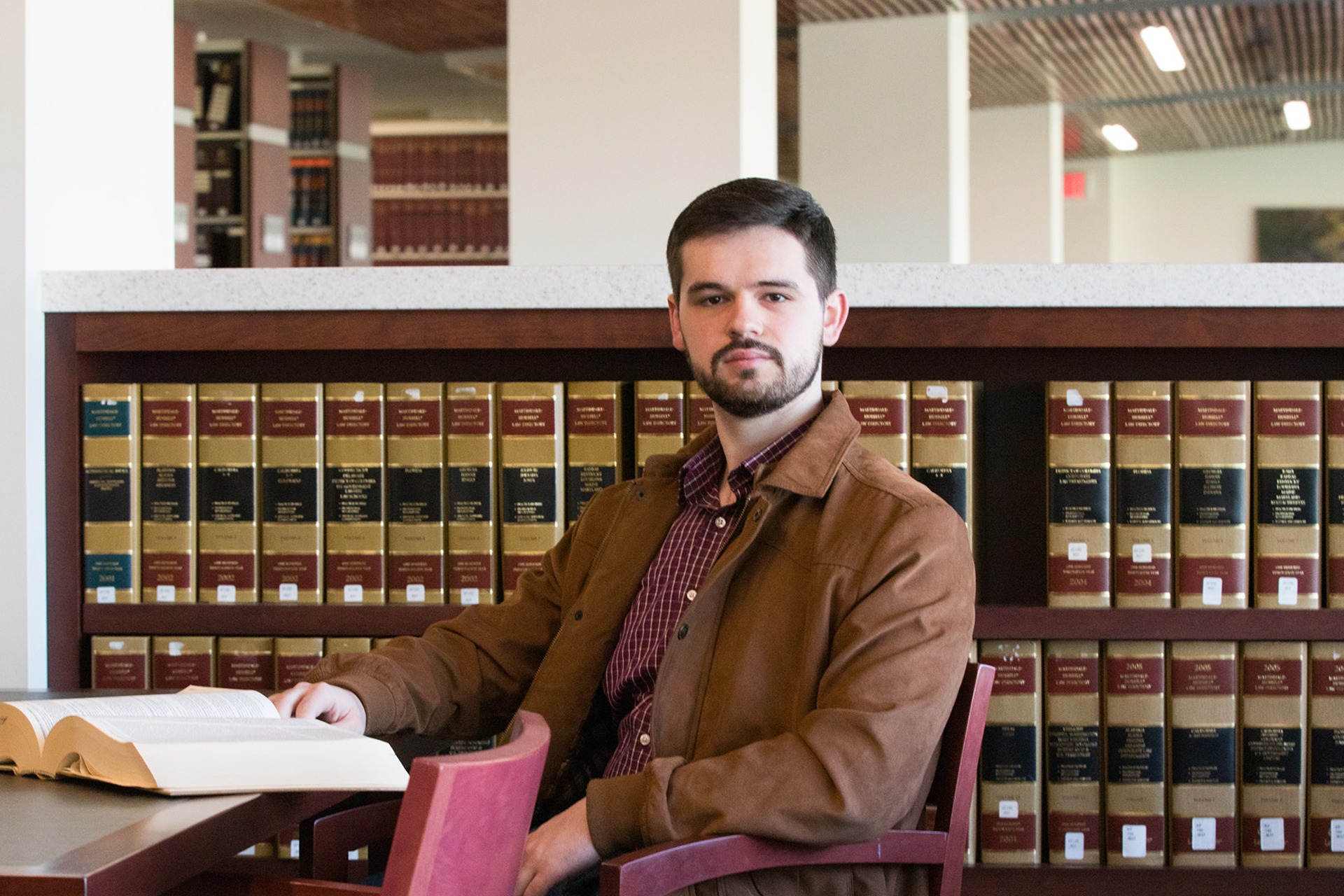
“I’d spoken with the victim’s twin daughters, and they’d been trying to get someone to look into it,” said Jeff Shumate, chief investigator with the Raleigh County Prosecutor’s Office. “I gave Grant the full case and had him review it and highlight some of the things he thought were important.”
Finding a missing body after 6 decades was, admittedly, a tall order.
“There was an initial investigation, and a lot of the stuff referenced in that investigation was hard to track down,” Joynes said. “There was a landmark where they found a dog tag nailed to a tree, which they thought was Sergeant Haynes’, and they referred to it as something like ‘The old beech tree.’ In that area, you’ve got thousands of acres of beech trees.”
However, there were certain advantages that came from working in southern West Virginia, where the tight-knit community has preserved generational knowledge. “It feels like everybody knows a little piece of something down there. There’s almost this community memory of things that happened. And if you could just ask everybody, you’d almost get the full picture.”
Interviewing people didn’t come easy to Joynes. His WVU Law experience gave him the strength and skill to dig deeper for leads.
“Before I came to this place, I was kind of shy,” Joynes said before pausing to greet a passing professor. “WVU Law will make you extroverted very quickly, and that’ll equip you with the people skills you need to reach out.”
Reaching out was essential to investigating the case. At one point, searching for a house that didn’t appear on any tax records or maps, the investigative team stopped to speak with diners at a local restaurant. One gave them a tip that led them to a local pastor, who then helped them locate the grandson of the house’s former owner.
According to Shumate, Joynes was instrumental to progressing the investigation. “He was very diligent, very detailed, and did a lot of work to try and locate the victim. You’re looking for a body that went missing in 1963, and the terrain changes so much over 60 years. We haven’t successfully located the victim, but without Grant’s work, we wouldn’t be anywhere close to where we are now.”
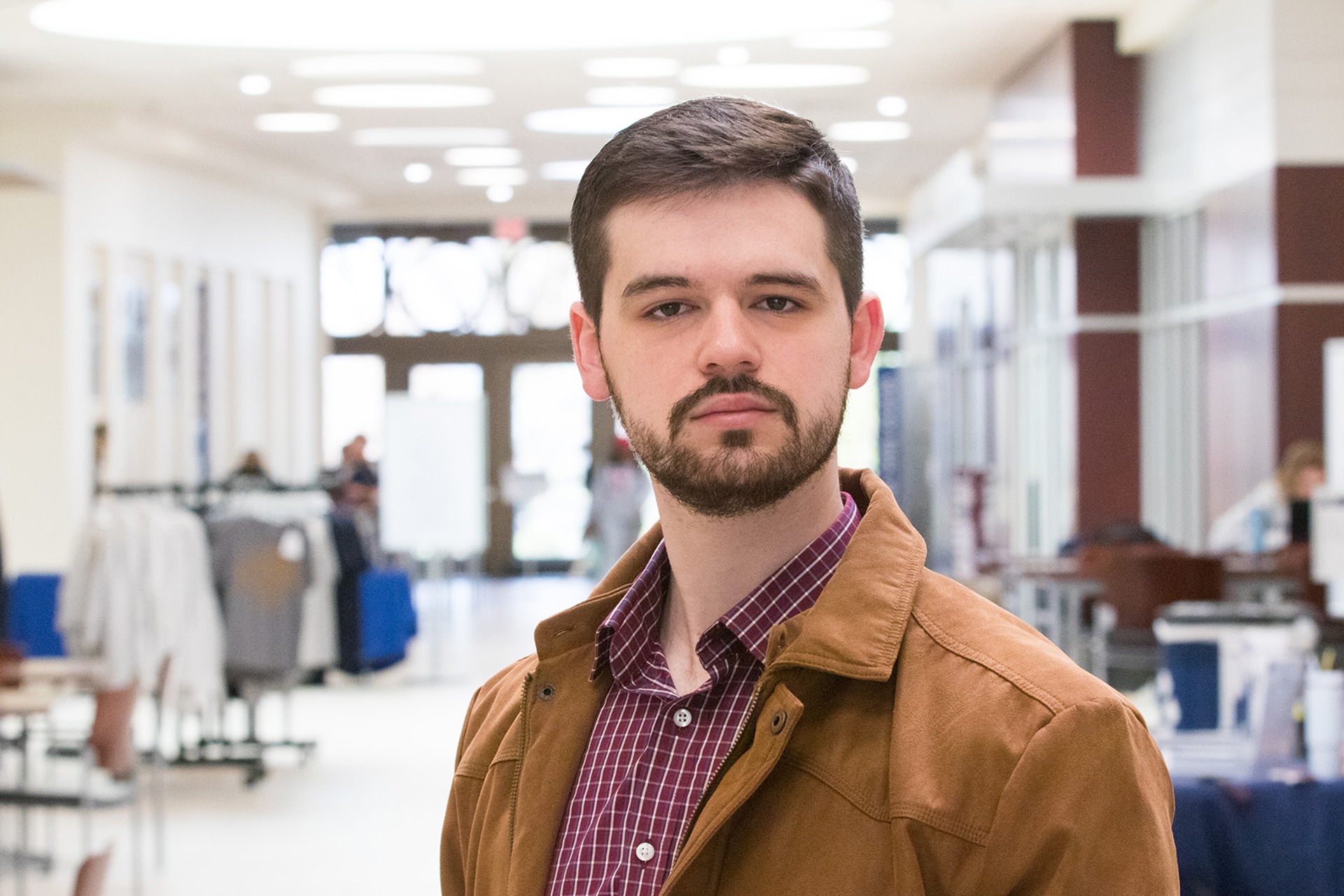
The search area was narrowed from 5 square miles to half a square mile – and that’s where the investigation stands today. The case is still open, but for Joynes, it was a life-changing experience.
“When you look at the role of a prosecutor, at victims of crime and their families, that’s where you really can make a difference,” Joynes said. “I was certainly able to learn from people who do it every day, and that was a privilege.”
It might be hard to see how a 60-year-old disappearance can still impact the life of a community. In West Virginia, however, echoes of the past can be heard everywhere, and an unsolved crime can remain a painful memory long after it was committed.
When Sergeant Haynes disappeared, he left behind his twin daughters, Brenda and Linda. Their search for their father gave Joynes the motivation to persist in his.
“This has never ended for them,” Joynes said. “They’ve never stopped looking. Sergeant Haynes disappeared when they were very young, and they grew up wondering where their dad’s at. The case being reopened has brought them a lot, and they seemed to be very, very pleased to get some momentum going. This is their life, really. It’s bigger than any of us.”
MEDIA CONTACT:
Andrew Marvin
Assistant Director of Communications and Marketing, WVU College of Law
Related
- WVU Law May 2026 Commencement: Future Leaders Take Their Next Steps
- Graduation 2026: Kayla Brown and Parker Stout, in love and law
- Graduation 2026: Chris Payne follows the trail his forefathers blazed
- Graduation 2026: Abigail Paugh brings a lawyer’s-eye-view to social work
- The team behind the bench: WVU Law students excel in judicial clerkships